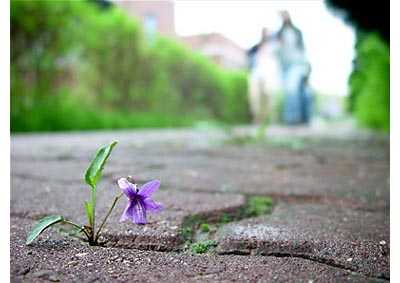
I'm sure they have the best intentions.
CLICK HERE for the full story
CLICK HERE for the winemaker's explanation
taking an honest look at how culture shapes our spiritual journey.
In the current issue of Rolling Stone there is an interview with U2 lead singer/activist Bono. It’s a fascinating read, and shows some great insight into this mans spiritual life and his views on modern christianity. Here’s a small excerpt from the article:
Soon after starting the band you joined a Bible-study group -- you and Larry and Edge -- called the Shalom. What brought that on?
We were doing street theater in
They were expectant of signs and wonders; lived a kind of early-church religion. It was a commune. People who had cash shared it. They were passionate, and they were funny, and they seemed to have no material desires. Their teaching of the Scriptures reminded me of those people whom I'd heard as a youngster with Guggi. I realize now, looking back, that it was just insatiable intellectual curiosity.
But it got a little too intense, as it always does; it became a bit of a holy huddle. And these people -- who are full of inspirational teaching and great ideas -- they pretended that our dress, the way we looked, didn't bother them. But very soon it appeared that was not the case. They started asking questions about the music we were listening to. Why are you wearing earrings? Why do you have a mohawk?
How did you end up leaving that?
I think we just went on tour.
And forgot to come back?
Well, we'd visit. If you were going to study the teaching, it demanded a rejection of the world. Even then we understood that you can't escape the world, wherever you go. Least of all in very intense religious meetings -- which can be more corrupt and more bent, in terms of the pressures they exert on people, than the outside forces.
What draws you so deeply to Martin Luther King?
So now -- cut to 1980. Irish rock group, who've been through the fire of a certain kind of revival, a Christian-type revival, go to
Suddenly you go, what's this? And you change the channel. There's another one. You change the channel, and there's another secondhand-car salesman. You think, oh, my God. But their words sound so similar . . . to the words out of our mouths.
So what happens? You learn to shut up. You say, whoa, what's this going on? You go oddly still and quiet. If you talk like this around here, people will think you're one of those. And you realize that these are the traders -- as in t-r-a-d-e-r-s -- in the temple.
Until you get to the black church, and you see that they have similar ideas. But their religion seems to be involved in social justice; the fight for equality. And a Rolling Stone journalist, Jim Henke, who has believed in you more than anyone up to this point, hands you a book called Let the Trumpet Sound -- which is the biography of Dr. King. And it just changes your life.
Even though I'm a believer, I still find it really hard to be around other believers: They make me nervous, they make me twitch. I sorta watch my back. Except when I'm with the black church. I feel relaxed, feel at home; my kids -- I can take them there; there's singing, there's music.
What is your religious belief today? What is your concept of God?
If I could put it simply, I would say that I believe there's a force of love and logic in the world, a force of love and logic behind the universe. And I believe in the poetic genius of a creator who would choose to express such unfathomable power as a child born in "straw poverty"; i.e., the story of Christ makes sense to me.
How does it make sense?
As an artist, I see the poetry of it. It's so brilliant. That this scale of creation, and the unfathomable universe, should describe itself in such vulnerability, as a child. That is mind-blowing to me. I guess that would make me a Christian. Although I don't use the label, because it is so very hard to live up to. I feel like I'm the worst example of it, so I just kinda keep my mouth shut.
Do you pray or have any religious practices?
I try to take time out of every day, in prayer and meditation. I feel as at home in a Catholic cathedral as in a revival tent. I also have enormous respect for my friends who are atheists, most of whom are, and the courage it takes not to believe.
How big an influence is the Bible on your songwriting? How much do you draw on its imagery, its ideas?
It sustains me.
As a belief, or as a literary thing?
As a belief. These are hard subjects to talk about because you can sound like such a dickhead. I'm the sort of character who's got to have an anchor. I want to be around immovable objects. I want to build my house on a rock, because even if the waters are not high around the house, I'm going to bring back a storm. I have that in me. So it's sort of underpinning for me.
I don't read it as a historical book. I don't read it as, "Well, that's good advice." I let it speak to me in other ways. They call it the rhema. It's a hard word to translate from Greek, but it sort of means it changes in the moment you're in. It seems to do that for me.
You're saying it's a living thing?
It's a plumb line for me. In the Scriptures, it is self-described as a clear pool that you can see yourself in, to see where you're at, if you're still enough. I'm writing a poem at the moment called "The Pilgrim and His Lack of Progress." I'm not sure I'm the best advertisement for this stuff.
What do you think of the evangelical movement that we see in the
I'm wary of faith outside of actions. I'm wary of religiosity that ignores the wider world. In 2001, only seven percent of evangelicals polled felt it incumbent upon themselves to respond to the AIDS emergency. This appalled me. I asked for meetings with as many church leaders as would have them with me. I used my background in the Scriptures to speak to them about the so-called leprosy of our age and how I felt Christ would respond to it. And they had better get to it quickly, or they would be very much on the other side of what God was doing in the world.
Amazingly, they did respond. I couldn't believe it. It almost ruined it for me -- 'cause I love giving out about the church and Christianity. But they actually came through: Jesse Helms, you know, publicly repents for the way he thinks about AIDS.
I've started to see this community as a real resource in

“self portrait, 1889” Vincent Van Gogh
I got a phone call the other day from a producer in the music industry. He was talking with me about a recent trip he had made to
I remember meeting him after that service and I specifically remember what I felt during that service. You know what I felt?
nothing.
I hadn’t put in any extra special effort, or extra prayer time or anything like that. I was just doing my thing. That got me to thinking about the “art apart from the artist”.
How much do our acts of worship actually have to do with us?
I can remember several times of musical worship where I felt like the music sucked, or I lost my voice, or I was in a bad mood, or I felt like my personal sin would negate my acts of worship, and in those times people would say that they had never been so moved in worship. I’ve come to the conclusion that our acts of worship have very little to do with us. I think God will use vessels that are willing, I’m pretty sure that’s the main qualifier in His eyes. Even hugely flawed vessels are used by God, myself included!!!
My dear friend Dean and I have been talking about this lately. He pointed me to an excellent article “art apart from the artist” by musician/writer Manuel Luz on this subject.
Manuel writes, “There must be some aspect of art that has the potential for expression, interpretation, and ministry separate from the artist who created it. For art is a painting apart from the painter, a story apart from the storyteller, an expression apart from the expresser. It is as if art has a life of it’s own, used by God at his discretion, for His purposes, in His timing. In a sense, art becomes alive, self-existent, legitimate. And we as artists have an obligation to birth the art, and set it free.
The work of an artist can have meaning and ministry outside of the scope of the artist who created it. Because the nature of God is that He can and does not only redeem the artist, but the work of the artist as well. He can use the work of a psychologically flawed, self-destructive painter in spite of himself. He can use the work of a sinful, prideful king in spite of himself. And He can use my music in spite of myself.”
“There may not be a more dangerous weapon for violence or oppression than religion. It seems counterintuitive, but when human beings create religions, we use them to control others through their guilt and shame. True religion always moves us to serve others and to give our lives to see those oppressed find freedom. [The Apostle] Paul persecuted followers of Christ and even instigated their deaths, but then he risked his own life so that others might live. He once personified the very worst that happens when a religion becomes civilized. It moves away from God and oppresses humanity in God’s name. Paul was once consumed by religion, but then he was transformed by the living presence of God Himself.
We, too, must find the barbarian way out of civilization. How have we come to this sanitized view of the faith to which Jesus calls us? Somewhere along the way the movement of Jesus Christ became civilized as Christianity. We created a religion using the name of Jesus Christ and convinced ourselves that God’s optimal desire for our lives was to insulate us in a spiritual bubble where we risk nothing, sacrifice nothing, lose nothing, worry about nothing. Yet Jesus’ death wasn’t to free us from dying, but to free us from the fear of death. Jesus came to liberate us so that we could die up front and then live. Jesus Christ wants to take us to places where only dead men and women can go.”
Erwin Raphael McManus, "The Barbarian Way"
The death toll in the 7.6 magnitude earthquake that struck
The earthquake was so strong that it could be felt across all of
Mudslides a half mile wide and up to twenty feet deep have swallowed entire villages. Overwhelmed officials have declared some areas mass graves and have stopped recovery efforts.
“Panabaj will no longer exist, we are asking that it be declared a cemetery. We are tired, we no longer know where to dig.”
WHAT IS GOING ON?!?!? Tsunami, Hurricane Katrina, Hurricane Rita, Hurricane Stan, earthquakes, mudslides… Is it me, or is this stuff happening with a lot more frequency than in the past?
Is it God's judgment? Global warming? Happenstance?
If I were the apocalyptic type I’d be gathering up my “left behind” books and heading for the bomb shelter.
I was reading a Q&A section in a christian publication the other day. One of the questions was this:
“Q. We are saturated today with morally questionable images and messages through myriad media outlets. Besides moving to a deserted island, what are some ways I can guard my kids and instill godly values-without over-sheltering them from the real world?”
Now, I’m sure that the answer given by the columnist was fascinating but I quit reading right after the question.
I thought back to the many discussions my wife and I have had since having our two sons on this very subject. Katie and I are products of vastly different parenting styles. This has made our conversations about our children’s future very interesting. Here’s a little background:
I was raised in a very strict family, with Dad being very much the authoritarian. I was very sheltered. I was home schooled, my parents “screened” my friends, I didn’t get to watch “dirty dancing”, I didn’t get to listen to secular music, I didn’t get to sleep over or do things like that.
Katie jokingly calls me “the boy in the bubble”.
Katie’s parents had a different approach. They were of the opinion that they had done their best to instill godly values in her as a small child and they were going to let her go out there and let her figure it all out. They said, “what good is the light that is in you until you take it into a dark place?” Don’t get me wrong, they cared, they were protective as well, she wasn’t a wild child or anything, but still a very different approach.
So, I guess that question in the magazine is my own. How can I teach my children to be real, and relational, and relevant, without compromise? I don’t want to over-shelter, but I certainly don’t want to under-shelter either.
We live in the tension. Where is the perfect balance point?
The Apostle’s Creed
I believe in God, the Father
Almighty Creator of heaven and earth.
I believe in Jesus Christ, God's only Son, our Lord,
Who was conceived by the Holy Spirit,
Born of the Virgin Mary,
Suffered under Pontius Pilate,
Was crucified, died, and was buried;
He descended to the dead.
On the third day He rose again;
He ascended into heaven,
He is seated at the right hand of the Father,
And He will come again to judge the living and the dead.
I believe in the Holy Spirit,
One holy church,
The communion of saints,
The forgiveness of sins,
The resurrection of the body,
And the life everlasting.
AMEN.
I believe in my income and Standard of Living,
Maker of pleasure on earth.
And in Things-I-Own and Things-I-Want-To-Get,
Which are conceived by desire for possessions born of a regular paycheck,
Suffered under monthly payments,
Then glorified, cherished and admired.
They descend in their value,
But on a future day I'll acquire some more,
Ascending in my status,
'Til I sit in quite comfortable retirement,
From whence I shall come to enjoy them all without end.
I believe in my home or apartment,
My comfortable automobile,
My vacation with pay,
My insurance for life,
The satisfaction of my wants,
And a bank account ever increasing.
AMEN.